Scientific breakthroughs in molecular biology often receive the spotlight, while the industrialization of these discoveries is seen as secondary or even easy. The move from lab-scale innovation to full-scale industrial production is one of biotech’s most complex, expensive, and misunderstood challenges.
Biotech success depends not only on scientific novelty but also on the ability to scale those discoveries into robust, compliant, and efficient manufacturing processes. Without this translation into an industrial framework, the benefits of groundbreaking discoveries remain out of reach for patients and the market.
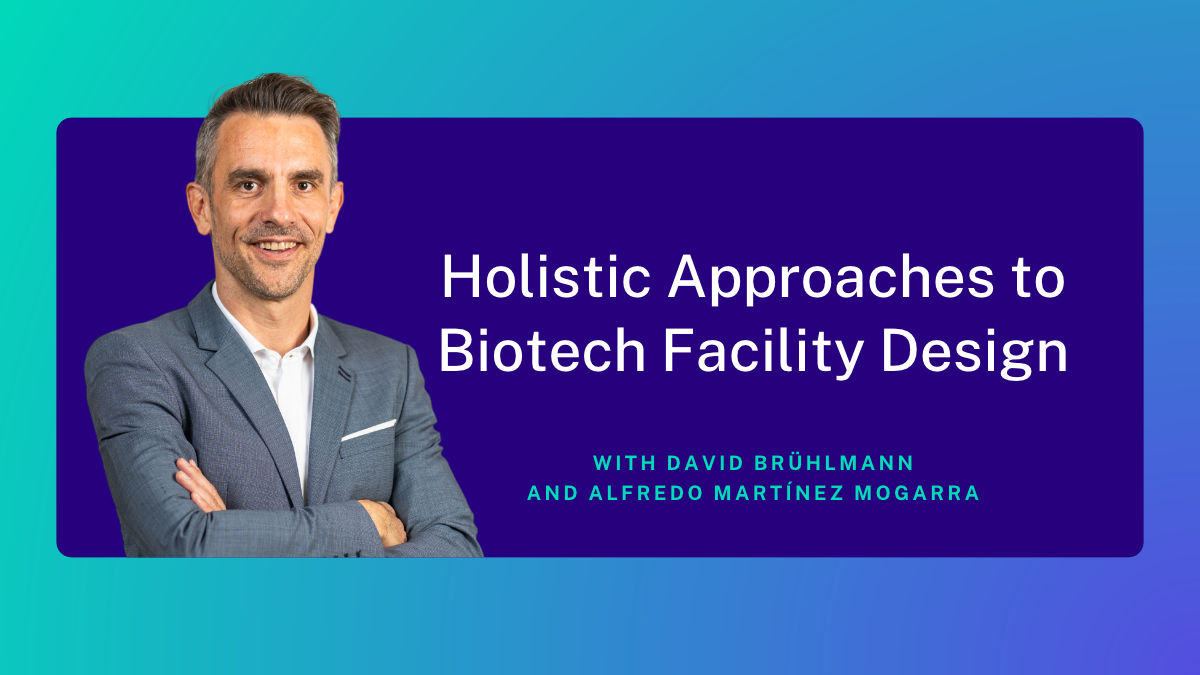
This concept is discussed in greater detail with Alfredo Martínez Mogarra in an episode of the Smart Biotech Scientist Podcast, hosted by David Brühlmann.
From a Lab Bench in Spain to Global Facilities
Alfredo Martinez-Mogara’s journey into biotechnology began over 35 years ago, during a time when industrial-scale production of recombinant proteins was just emerging. Inspired by the idea of genetically engineered bacteria producing human proteins, he pursued a career in microbiology. He later joined a Swiss-Italian lab working on erythropoietin, also known as erythropoietin, erythropoietin, and erythropoietin factor.
With no existing biotech infrastructure in Spain then, Alfredo had to learn by doing. He received a fermenter, a box of tools, and a set of instructions, and began producing. Over the decades, he contributed to the development of monoclonal antibodies, synthetic DNA, and viral vectors, while also co-founding the Biotech Academy in Rome, a center for knowledge transfer and training in biotech manufacturing.
His extensive global experience across greenfield sites, brownfield retrofits, and startup environments offers a unique perspective on the hidden complexities of biotech operations.
From Discovery to Delivery: The Real Bottlenecks
Biotech entrepreneurs often underestimate the leap from discovery to production. It’s like being a talented home cook and assuming you can open a restaurant. The ingredients, methods, and environment may appear familiar, but the demands of scale, regulation, and consistency change everything.
Key barriers include:
- Costs and Complexity: Biotech manufacturing ranks among the most capital-intensive industries, rivaling aviation and shipbuilding.
- Cross-disciplinary Needs: Success isn’t just about biology. It requires engineers, regulatory experts, quality assurance teams, supply chain professionals, and financial analysts.
- Resilience and Endurance: New ventures must overcome continuous hurdles, often discovering problems gradually as they scale up.
Designing Biotech Facilities: Where It All Begins
Facility design is the foundation of scalable bioprocessing. Surprisingly, many companies overlook the most critical first step: knowing precisely what they want to build.
Key principles of effective design include:
- Define Objectives Clearly:
- What product(s) will you manufacture?
- What capacity do you need?
- Are you serving the commercial market or the R&D sector?
- Understand Regulatory Requirements:
- Early alignment with national and international regulators is critical.
- Regulatory input can highlight red lines that impact layout, workflows, and equipment choices.
- Develop Policies Before Construction:
- Determine the use of single-use systems, open operations, environmental conditions, and automation levels.
- Draft User Requirement Specifications (URS) and automation strategies early.
- Engage Engineers Collaboratively:
- Engineers adapt needs into physical designs using available space.
- Frequent feedback loops with internal teams ensure feasibility and compliance.
- Plan for Time-to-Market Pressures:
- Idle facilities incur costs. Effective coordination and early planning reduce downtime and optimize launch windows.
Greenfield vs. Brownfield Projects
While greenfield facilities offer greater design freedom, brownfield projects are often more cost-effective. Brownfields can save on land and construction costs, but may compromise efficiency due to space or layout limitations.
The decision between the two should be based on:
- Available capital
- Timeline flexibility
- Existing infrastructure compatibility
- Scalability needs and long-term goals
Scaling Realities: From Bench to Industrial Floor
One of the most common mistakes in facility planning is focusing solely on the bioreactor while overlooking its downstream implications. A 2,000-liter bioreactor might be impressive, but without proportionally scaled downstream processing capacity, the entire system becomes inefficient.
Other overlooked areas include:
- Personnel Flow: Dressing rooms, break areas, and operational support zones directly affect productivity.
- Logistics: Storage space must match the lead time and volume of supplies.
- Contingency Planning: Having backup systems for autoclaves, utilities, and key equipment is essential to prevent shutdowns.
Key Facility Design Oversights
- Designing based on upstream alone, neglecting the downstream and support areas
- Ignoring utilities and emergency response systems until late in the process
- Failing to allocate space for non-manufacturing personnel and functions
Operational Differences at Scale
Process behaviors change drastically at an industrial scale. Something as simple as glucose feed can pose significant issues. In one facility, concentrated glucose had to be dissolved at 50°C. While it is easy in a small beaker, heating 300 liters safely becomes a significant risk.
Other examples include:
- Handling and transport logistics of large fluid volumes
- Space constraints for mixing, cooling, and temporary storage
- Procedural complexity in moving equipment, piping, or mobile tanks
Risk Mitigation and Resilience Planning
Comprehensive risk management is a regulatory expectation and an operational necessity. Every major system—power, water, HVAC, autoclaves, and bioreactors—requires a contingency plan.
Strategies include:
- Dual electric feeds for critical systems
- Inventory of critical spare parts with lead times
- Defined emergency protocols for natural disasters or supply chain disruptions
Areas to Address in Risk Analysis
- Single points of failure (power, autoclaves, HVAC)
- Supply chain vulnerabilities (raw materials, specialized components)
- Regulatory exposure (product continuity, patient safety)
People and Collaboration: The Heart of Biotech Facilities
A biotech facility is only as effective as the people who run it. Coordinating manufacturing, quality, engineering, and supply chain requires more than technical skill—it requires culture.
Effective collaboration starts with the separation of thought and action:
- Operational teams focus on executing tasks with minimal disruption.
- Cross-functional leadership aligns decisions, shares trends, and anticipates issues.
The operations team should include:
- Manufacturing operators
- QA/QC specialists
- Process and automation engineers
- Supply chain managers
Establishing shared goals, routine communication, and respect between disciplines helps avoid the all-too-common tension between “quality” and “production.”
Choosing Suppliers and Equipment
Selecting the right equipment and suppliers is a matter of long-term reliability, not short-term cost savings.
Key selection criteria:
- Fit for Purpose: Define precise specifications based on process needs, not off-the-shelf brochures.
- Support and Maintenance: Choose suppliers with proven regional support and maintenance coverage.
- Regulatory Readiness: Ensure GMP compliance, transparency, and qualification capabilities.
Transitioning to Routine Manufacturing
Once operations begin, the focus shifts to stability and predictability. Like brewing beer, industrial biotech requires consistent inputs and controlled environments.
To ensure long-term success:
- Identify critical manufacturing indicators
- Use control charts to track trends and deviations
- Investigate drifts proactively before they trigger failures
An MSAT (Manufacturing Science and Technology) team plays a crucial role in this process, driving continuous improvement, analyzing trends, and informing decision-making.
Embracing Digital Tools and Automation
Digitalization and automation must be integral to the facility’s vision from day one. Even if implementation comes later, foundational systems should be planned early.
Start with:
- ERP Systems: Track materials, inventory, and warehouse status
- SCADA Systems: Enable equipment monitoring and process control
- Digital Documentation: Integrate electronic batch records, quality control logs, and document systems
Evaluate automation based on:
- Task frequency and labor intensity
- Impact on consistency and safety
- Long-term cost-benefit analysis
The Role of AI and Machine Learning
AI is still evolving in bioprocessing, but its potential is enormous. When trained on process data, AI can identify hidden relationships between material attributes and final product quality.
Read More: The Case For Digital Hybrid Modeling In Bioprocess Development
Possible applications include:
- Bioreactor performance modeling
- Predictive control and simulation
- Early identification of variability drivers
Although still in development, these tools provide a data-driven approach to optimizing processes previously governed by intuition or trial and error.
Avoiding the Pitfalls
Technology dependency comes with risks, particularly in a volatile geopolitical and supply chain environment. Concentrated suppliers, microchip shortages, or political conflict can create bottlenecks. Additionally, biotech remains a high-risk industry, with high failure rates and long ROI timelines.
Investors and operators must remain aware of:
- Supply chain fragility
- Capital risks
- Technology adoption lags
Final Remarks
The most important message from decades of experience is this: think deeply before you act. Planning, anticipation, and scenario modeling make the difference between operational chaos and long-term success.
Every process has its scale-up surprises. Every facility poses new constraints. However, with rigorous design, risk analysis, and collaboration, biotech facilities can be built to function and thrive.
Next Step
If you found value in today’s episode, take a moment to like, follow, and leave a review on Apple Podcasts or your favorite platform—it helps us reach and support more scientists like you.
Thanks for tuning in to the Smart Biotech Scientist podcast and being part of this journey toward bioprocess mastery. For more insights and practical tips, visit
About Alfredo Martínez Mogarra
Alfredo Martínez Mogarra is a bioprocess engineer with a background in biology and over 30 years of experience in the biotech industry. He has worked with leading companies across Spain, Europe, and the USA, including Amgen, Serono (now Merck), and Genzyme (now Sanofi).
Alfredo has participated in the design, construction, and start-up of multiple manufacturing facilities in various countries and has broad expertise in process improvement for a wide range of molecules
Connect with Alfredo Martínez Mogarra on LinkedIn.
Further Listening
If you enjoyed this episode you might also like listening to:
Episodes 205 - 206: Process Economics Decoded: How to Model Biomanufacturing Costs From Clinical to Commercial Scale with Niklas Jungnelius
Episodes 139 - 140: Regulatory Secrets Revealed: Why Your CMC Strategy Could Make or Break Your Biotech Startup with Rivka Zaibel
Episodes 03 - 04: How to Master Biotech Scale-up Without Guesswork with Leonardo Sibilio
Episodes 233 - 234: Why Most Bioprocess Automation Projects Fail Before the Robot Is Even Ordered with Anthony Catacchio
Want to Join?
Are you a CMC or biomanufacturing leader with hard-won lessons on process development, scale-up, or CDMO management? We’re always looking for practitioners with real execution stories to share on Smart Biotech Scientist.
Apply to be a guest or recommend someone:
David Brühlmann is a strategic advisor who helps C-level biotech leaders reduce development and manufacturing costs to make life-saving therapies accessible to more patients worldwide.
Hear It From The Horse’s Mouth
Want to listen to the full interview? Go to Smart Biotech Scientist Podcast.
Want to hear more? Do visit the podcast page and check out other episodes.
Do you wish to simplify your biologics drug development project? Contact Us