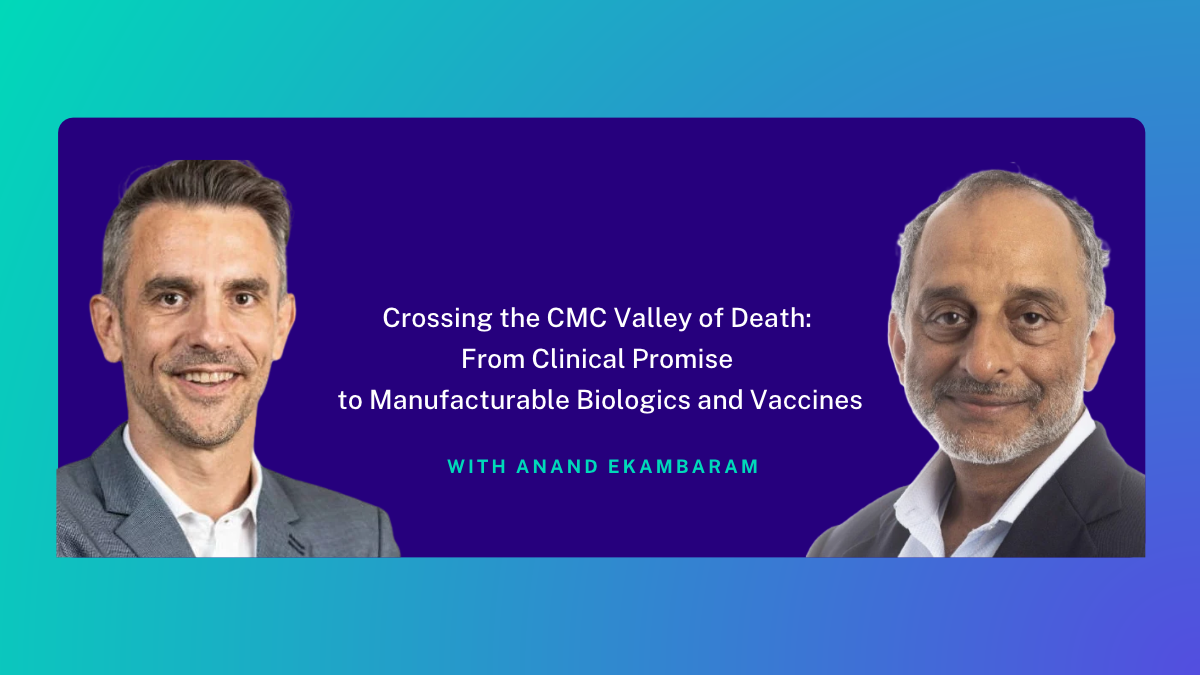
Technology transfer, often seen as a single transaction, is actually a complex relay of knowledge, judgment, and precision engineering between distinct teams. But what happens when critical insights vanish in the handover, and how do organizations adapt when the next pandemic could be around the corner?
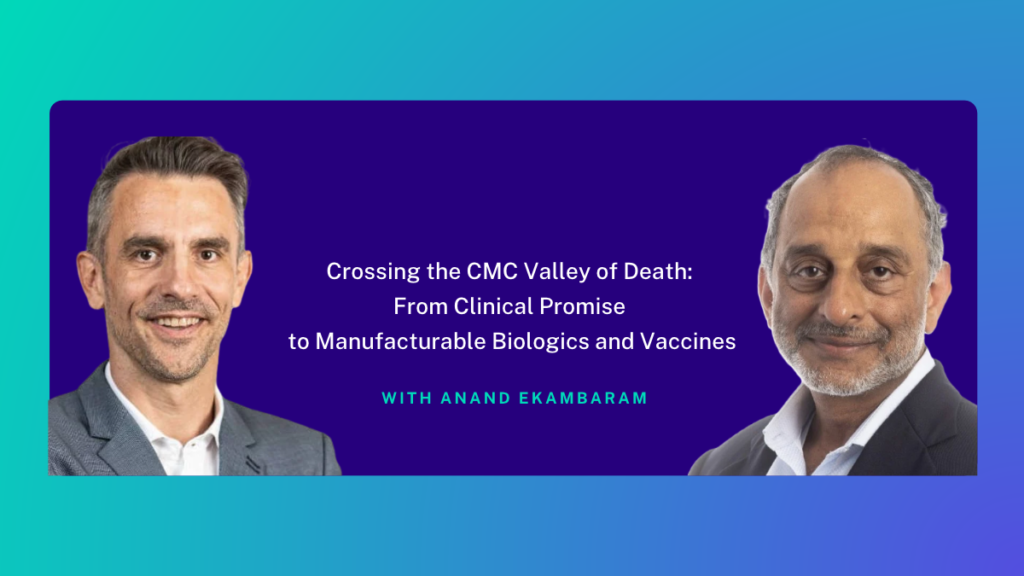
Today’s episode features Anand Ekambaram, a leader whose career has spanned major vaccine manufacturers, global health organizations, and transformative tech transfer initiatives. Anand’s perspective is shaped by decades of experience navigating the realities of drug manufacturing, from watching the Asian vaccine industry explode onto the global stage to shaping rapid-response strategies for global outbreaks.
Episode Highlights
- Challenges in capturing and transferring “tribal knowledge” that resides with individuals rather than in documentation [04:31]
- The complexity and variability of biologic and vaccine production, and why process understanding must extend beyond initial qualification batches [04:49]
- Insights into global vaccine manufacturing: the rise of LMIC manufacturers, cost reductions, and issues of equitable access during pandemics [06:39]
- How procurement models like Gavi’s centralized approach achieved efficiency and scale, and the role of assured demand [09:55]
- Reflections on technological shifts—mRNA, ADCs, personalized medicine—and their implications for manufacturing readiness [11:37]
- The movement toward distributed manufacturing and supply chain “reshoring” in response to geopolitical risk [13:01]
- Lessons from the COVID-19 response: the impact of pre-pandemic research, federal risk underwriting, and the importance of preparedness during “peacetime” [14:01]
- The need for steady, continuous investment and policy consistency to ensure that scientific advances benefit those most at risk [17:20]
In Their Words
What I would say more than anything else that determines the success is the organizational buy-in and alignment, not just at the senior management level, but at the working level, that everybody understands what the goal is and how we’re going to get there. Often in tech transfers that I see, there is somewhat of a hierarchy. The scientists who develop the process versus the manufacturing site people. Like I said, they’re not only organizationally separate, but they’re often physically separate too. So that day-to-day interaction, getting to understand your team member, water cooler chats, just common happy hours, that becomes more difficult.
Podcast Transcript
David Brühlmann [00:00:38]:
Imagine handing over a complete tech transfer package, the process description, batch records, analytical methods, every document signed. The receiving side runs the first batch and the results do not match. What was missing never made it onto paper. In part 2 of my conversation with Anand Ekambaram, we keep exploring what it takes to move a biologic or a vaccine from promising science to reliable manufacturing, including the knowledge that lives in people rather than protocols. Check here part one.
You’ve been involved in many technology transfers. That’s also an important area of CMC. What separates a successful tech transfer from one that struggles?
Anand Ekambaram [00:02:43]:
What I would say more than anything else that determines a success is the organizational buy-in and alignment. Not just at the senior management level, but at the working level, that everybody understands what the goal is and how we’re going to get there. Often in tech transfers that I see, there is somewhat of a hierarchy.
The scientists who develop the process versus the manufacturing site people. Like I said, they’re not only organizationally separate, but they’re often physically separate too. So that day-to-day interaction, getting to understand your team member, water cooler chats, just common happy hours, that becomes more difficult. This is not an insurmountable risk, but you have to recognize the risk and consciously plan for team building around a common mission, around why are we doing this, what are the ways of working. Often you might be doing this across 2 different cultures.
Your scientific talent may be in, say, the US, and the manufacturing site may be in Europe. And as you know, there are different ways of working and different ways of communicating. If I had to pick one factor, I would pick this organizational team. Make sure you have a really cohesive team and a team ways of that recognizes the importance of every single contributor and then clearly understands roles and responsibilities as well, and then establishes ways of making decisions.
Beyond that, there are all the things that the PDA Tech Transfer Guide will talk to you about. Very clear product definition from the sending site, very clear understanding of the fit of that product definition into the manufacturing site, what manufacturing processes are we going to use. And I would encourage this interaction to start as early as possible, as soon as you know which site you’re going to, because the manufacturing site can often help you make decisions or help you make choices in development that accelerate the lead time of transfer. So it’s a difference between buying new format parts for your filling line versus using existing format parts.
David Brühlmann [00:04:30]:
From my experience doing tech transfer, one additional challenge is capturing the knowledge, let’s say the tribal knowledge, especially these details. What knowledge do you think is the hardest to capture in protocols and batch records and in a tech transfer document?
Anand Ekambaram [00:04:49]:
I think particularly for biologics, I think here’s where I would plan for something rather than try to sort of stop it from happening. So let me put it this way. That didn’t come across that well. Biologics and vaccines are inherently complex processes, and we should do the maximum amount of process development we can, but recognize that it could still leave gaps in knowledge.
A simple thing would be the variability due to raw materials. So when you run the process in the lab and in full scale, maybe you have tested out 1 or 2 batches of raw materials, but then the first year of production, you’re going to get 10 different batches of raw materials, and only then will you understand the full extent of variation. Certainly documentation, process manuals, reports of experiments, all those should be captured.
And with the technical writing capabilities that AI and large language models bring, those should be much easier in terms of organizing the information, in terms of searching the information. A second aspect of this would be to say that process knowledge build does not end with successful PPQs, that successful PPQs is simply an intermediate step in your development of full process understanding. And that full process understanding will come as you make more and more batches, and then set up a mechanism to update that knowledge base with real-world manufacturing evidence.
David Brühlmann [00:06:03]:
I would like to zoom out and focus perhaps a bit on your later-stage career. You’re working now with different organizations, global health organizations. And as you said earlier, the focus is also bringing promising therapeutics to people who might not be able to access them today. What are some things you’re seeing in the industry that work well? What are perhaps still some opportunities where we can change the way we produce, the way we develop drugs in order to reach a greater population?
Anand Ekambaram [00:06:38]:
As I look back at my career, the industry has evolved significantly, of course. Let me pick vaccines as one of the areas to explore with the question that you asked. Because it makes an interesting case study. And also, I know more about vaccines than probably about small molecules. So when I started in ’92 in the vaccine industry at Merck, most of the vaccines were actually being made by companies like Merck, GSK, Sanofi Pasteur, all the big names. And slowly what we started seeing is the emergence of manufacturers in Asia. And we started to see emergence of Indian suppliers, notably Serum Institute. We started to see Brazil, Indonesia, Korea, so many more and more stepped into the game. And I’ll say one of the very significant contributions of this Asian and South American, what I call LMIC manufacturers, is to really fill an enormous need for cost-competitive vaccines.
And if you look at where Gavi today procures its vaccine doses, it’s 95% from these manufacturers that are able to often provide you with a vaccine at $1 a dose, as opposed to the tens or hundreds of dollars that you might pay for it in the US. So that’s a very significant evolution in the industry that I have seen in the last so many years. And one of the things that Gavi, with its enormous buying clout, was able to do was to sort of drive efficiencies where more and more vaccines were being provided to the Gavi-eligible countries at a very competitive cost for these products. So that the statistics are just astounding as to how many people have benefited and how many lives have been saved.
Now, the next stage of evolution, which is sort of what a lot of the global health community is talking about, is how do we move away from the lowest unit cost vaccine to a much more distributed supply model that not only looks at cost, but also looks at pandemic resilience? Because the thing that drives a lot of policy discussions these days is the realization that many countries, especially countries in LMIC, especially Africa, that they were left out when it came to rolling out the pandemic doses.
So it is not the medical need that drove the allocation of doses. It was who had the manufacturing capacity that drove the allocation, which is not what you want. It’s not in the benefit of the people in Africa, but it’s also not to the world’s benefit. We want the doses to go to where you’re most effective at containing the pandemic or saving the most lives. So now the discussion is much more how do we encourage vaccine manufacturing in countries that haven’t done it before, take a much more regional approach to it as opposed to centralizing.
The effect of this procurement by Gavi was to centralize vaccine manufacture and aim for efficiencies of scale. Now the industry and Gavi themselves have made substantial contributions to these policy discussions. They’re looking at how do we distribute vaccine manufacturing capacity so that when the pandemic comes, these other regional manufacturers can switch from making routine products to pandemic vaccine products. That’s obviously a long journey and a huge step, but I think it’s a necessary one.
David Brühlmann [00:09:40]:
The efficiency gains Gavi and other organizations were able to make, where did they mainly come from? Was that from the supply chain model? Was that from manufacturing? Was it something else?
Anand Ekambaram [00:09:54]:
Yeah, good question. So just to give you a little bit of perspective, if you look at a Western pharma company, there’s a huge amount of overhead associated with marketing, for example. By some estimates, an average big pharma company spends $0.40 out of every dollar on marketing, $0.40 on manufacturing, and $0.20 on research. I mean, don’t quote me on these numbers, but that gives you kind of an order of magnitude, right? So when Gavi procures it from, say, a bulk supplier, that marketing cost disappears. So that’s one of the ways they’re able to achieve efficiencies.
Number 2, a large number of the vaccines supplied— in fact, I would say almost all the vaccines supplied by Asian manufacturers, South American manufacturers are the beneficiaries of tech transfer programs conducted under various schemes. So they didn’t require expensive clinical development as a first-in-class product. So now you’ve taken out much of the research overhead. Where they did develop the products, it was often reverse engineered, which requires substantially less R&D expenditure than de novo development.
And lastly, there was the advantage of scale. Many of these manufacturers produced at a huge scale, which brings its own efficiencies. And with a centralized tendering system, the manufacturers were ready to make those products for you. Because there was assurance of demand. So what Gavi provided in some ways was the assurance of demand, which actually drove down cost.
David Brühlmann [00:11:14]:
I would love to hear your perspective as you’ve been in the industry now for 40-plus years. Looking into the future, I know it’s a difficult question because we have a lot of new technologies, but what is your bet, let’s say, in 5 to 10 years? What are the main developments on the technological side you see in the biotech industry?
Anand Ekambaram [00:11:37]:
Well, one of the developments that we are seeing is the diversity of the technology platforms and modalities. If you take a very broad look, it’s not just mRNA that’s coming into its own, not just as a vaccine, but as a personalized cancer vaccine. Some very promising early results from Moderna and Merck on that. You have the traditional mRNA vaccine, you have the mRNA cancer vaccines, you have ADCs, antibody-drug conjugates, lipid nanoparticles, and there are probably a few that I have missed.
While the industry has capacity, they don’t necessarily have capacity in the kind of things that are coming up. So the industry needs to make a transition from these existing manufacturing capabilities to these newer modalities and their particular needs. In some cases, that may mean building supply chain capabilities or manufacturing capabilities from scratch. In some cases, It may mean significant level of investment in refurbishing or retrofitting these facilities.
And on top of that, you’re now seeing the emergence of personalized medications. So CAR-T has already made an impact. It’s been with us for about now 8, 9 years, I think. That’s a very different kind of supply chain. And if the mRNA anti-cancer vaccine model is successful, you’ll see a proliferation of those personalized supply chains. So the biggest trend that I see now in the technical space is that new modalities, and do you have the manufacturing capability to supply them at scale?
Beyond that, I think there are policy and business conditions which most people know about. There’s a big trend towards reshoring. And it’s interesting, most people think that reshoring started with all the policy changes that you saw beginning of the last administration. It’s actually that trend that I noticed going back to 2018 or 2017 because of the geopolitical threats. Most of our supply chains go back to China and India, and there was a perception of geopolitical disruptions, not necessarily— nobody anticipated COVID at that time.
But certainly, there were— I guess sometimes there was a concern about wars and trade disputes and other things that are happening. So reshoring is a trend that you’ll see. People are starting to think differently about supply chains. Control of supply chain is seen as a much bigger factor than simply unit cost and efficiency.
David Brühlmann [00:13:47]:
This has been great, Anand. What additional question do you suggest I ask?
Anand Ekambaram [00:13:52]:
That’s a very interesting question because there are so many things that we could talk about. People often used to ask me why the 100 Days Mission, especially when I was representing CEPI. And a simple answer to that was between 100 days and 300 days, which is what— about 350 days, which is what it took for the, say, the mRNA vaccine to get approved— is the difference between an epidemic and a pandemic.
So if you see the proliferation of cases, and you can go back and chart the COVID cases worldwide, you’ll see that at 100 days it was much more manageable than it was at 365 days. So the question that you asked is, is it genuinely compressible, or are you simply taking shortcuts? This is where I’ll say most people see the 100 days, which is you sequence a gene till you have a product. But what most people don’t realize that, especially for coronaviruses, there was an enormous amount of groundbreaking scientific work that was done years preceding the pandemic because of SARS-CoV-1 and because of MERS.
So the understanding of the disease was really, really great, and people understood that the immunogen design, which is the most important part about starting vaccine development, is understanding the immunogen design. And they understood that if you create the S protein as an immunogen, as a vaccine, that it would work. And then, of course, mRNA gave us a fantastic way to accelerate that process. So the important part about 100 days is not just what you do in those 100 days, but what you do in the years preceding that. Pandemics are attention-grabbing events.
Even the Ebola outbreak— it’s not an epidemic or pandemic— has so many people woken up and oh, let’s put some funds in that. Let’s do clinical development. But my question to you is, what were you doing in the 5 years preceding this epidemic? Because everybody knew at some time or the other you’re going to have another Ebola outbreak. And so the important part about 100 days is to realize that you should really be putting in your effort, resources, and investment, as it was done for the coronavirus, encourage basic research all the way up to understanding what do you need to do to have a Phase 1-ready clinical supply when the outbreak comes.
Right now, even with this most recent Ebola epidemic, it took clinical supply about 75 days to get to the affected area. Now, that’s a fantastic timeline to go from master virus seed to clinical supply, but my question is, why didn’t you have the clinical supplies ready to go with protocols, clinical trial centers, and institutional review boards, and all those other things already done so that you could start your vaccination within week 1 of declaration of an outbreak?
You know, in those 70 days, you can already see how much the disease has spread, and we still don’t have an approved vaccine, and this outbreak promises to be the biggest part. So the 100 days to me is great, but really the question is, what are you doing in times of peace not in times of war. I always say your best bridges are the ones that you build in peacetime, and the reason why with coronavirus there wasn’t any CMC shortcuts is because of this upfront work that was done.
There are 2 other critical reasons why COVID vaccine was able to meet those critical timelines. One was the federal government’s decision to underwrite the risk of a Phase 2. What they told companies is, as soon as you have Phase 1 safety and preliminary efficacy, go to Phase 3 because we will underwrite the cost of Phase 3. A lot of companies do Phase 2 so that they can manage their financial risk of a much bigger Phase 3 trial. Number 2, a lot of trials get slowed down because of lack of enrollment, and for all the wrong reasons, the COVID epidemic gave you a lot of enrollment, and that made it easier to reach the statistical endpoint. Like I said, for tragic reasons, but it worked out well for the vaccines.
David Brühlmann [00:17:13]:
With all that we’ve discussed today, what is the most important takeaway?
Anand Ekambaram [00:17:19]:
My most important takeaway is for folks to understand that there needs to be consistent, and sometimes it’ll be low-key, consistent low-key efforts towards developing these solutions. This is not a firefighting exercise, and sometimes the attention goes towards those news headlines and large funding allocations and things like that. The real work is to be done in the labs by scientists, by engineers, by epidemiologists, by regulators constantly thinking through. This is a difficult problem which is not amenable, at least just as yet, to grand solutions. I mean, sometimes that plodding, if you like, is seen as unsexy, but that’s what ultimately delivers results.
So I’m asking for consistency in funding, steadiness in policy decisions, long-term plans that don’t change just because we’ve had a change in government, and apply good science. And last but not the least, keep the populations that are most at risk in your front and center. To me, science doesn’t mean anything if it ultimately doesn’t translate into a benefit for the people.
David Brühlmann [00:18:20]:
That’s a great way to conclude. Science doesn’t mean anything if it doesn’t translate into benefit for people. That’s what’s waking us up every single day. Hey, it’s been a huge pleasure, Anand. Great discussion. Love it. Where can people get a hold of you?
Anand Ekambaram [00:18:36]:
Well, I’m a one-man consultancy operation. The best way to reach out to me is through LinkedIn because I don’t have a website. I don’t think I need one. I rely on word of mouth. And the message to your listeners would be, you don’t need a contract with me to talk to me. I’m happy to talk for free.
David Brühlmann [00:18:52]:
There you got it, smart biotech scientists. Use that offer. And once again, thank you very much, Anand, for being on the show today.
Anand Ekambaram [00:19:02]:
Thank you very much for the opportunity. It’s been a pleasure.
David Brühlmann [00:19:04]:
A process is more than its documents. It carries the judgment, the habits, and hard-won understanding of the people who built it. And whether that knowledge travels often decides if a program moves forward or stalls. To deliver the therapeutic promise, you must master CMC. I hope this conversation gives you a clear view of the road from the lab to commercial manufacturing. If it did, please leave a review on Apple Podcasts or your favorite platform. Thank you so much for tuning in today.
Disclaimer: This transcript was generated with the assistance of artificial intelligence. While efforts have been made to ensure accuracy, it may contain errors, omissions, or misinterpretations. The text has been lightly edited and optimized for readability and flow. Please do not rely on it as a verbatim record.
Next Step
If you found value in today’s episode, take a moment to like, follow, and leave a review on Apple Podcasts or your favorite platform—it helps us reach and support more scientists like you.
Thanks for tuning in to the Smart Biotech Scientist podcast and being part of this journey toward bioprocess mastery. For more insights and practical tips, visit
About Anand Ekambaram
With more than three decades in the biopharmaceutical industry, Anand Ekambaram has built extensive experience at the intersection of science, manufacturing, and global health. His career includes leadership roles at Merck, Bristol Myers Squibb, and CEPI, where he contributed to strengthening global vaccine manufacturing and supply-chain networks.
As founder of Global BioVax Solutions, Anand works with biotechnology businesses, international health organizations, and investors, providing guidance on CMC development, manufacturing strategy, and technology transfer. His work focuses on helping transform promising scientific innovations into scalable products that meet regulatory requirements and can reach the market.
Connect with Anand Ekambaram on LinkedIn.
Further Listening
If this episode got you thinking about the CMC valley of death, these are worth a listen next. Each one looks at a different part of how to see manufacturing risk coming before it costs you.
Episodes 189 - 190: Why Smart Biotech Founders Plan CMC First (While Competitors Burn Cash Later)
Episodes 231 - 232: From IND to BLA: The Biologics CMC Decisions That Determine Regulatory Success with Henri Kornmann
Episodes 199 - 200: Mastering Quality by Design: From Product Failures to Commercial Success in Biologics CMC Development
Episode 243: Turn Tech Transfer from a Gamble into a Managed Process: The 6-Pillar Biologics Scale-Up Framework
Want to Join?
Are you a CMC or biomanufacturing leader with hard-won lessons on process development, scale-up, or CDMO management? We’re always looking for practitioners with real execution stories to share on Smart Biotech Scientist.
Apply to be a guest or recommend someone:
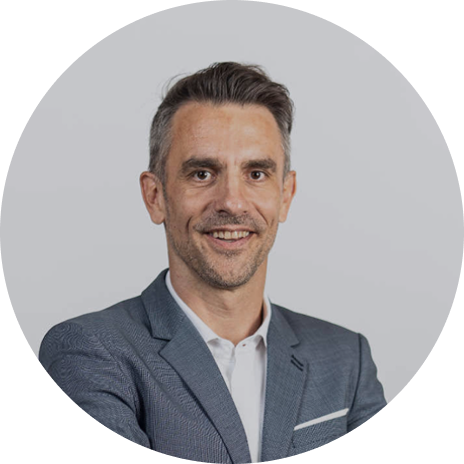
David Brühlmann is a strategic advisor who helps C-level biotech leaders reduce development and manufacturing costs to make life-saving therapies accessible to more patients worldwide.
Hear It From The Horse’s Mouth
Want to listen to the full interview? Go to Smart Biotech Scientist Podcast.
Want to hear more? Do visit the podcast page and check out other episodes.
Do you wish to simplify your biologics drug development project? Contact Us