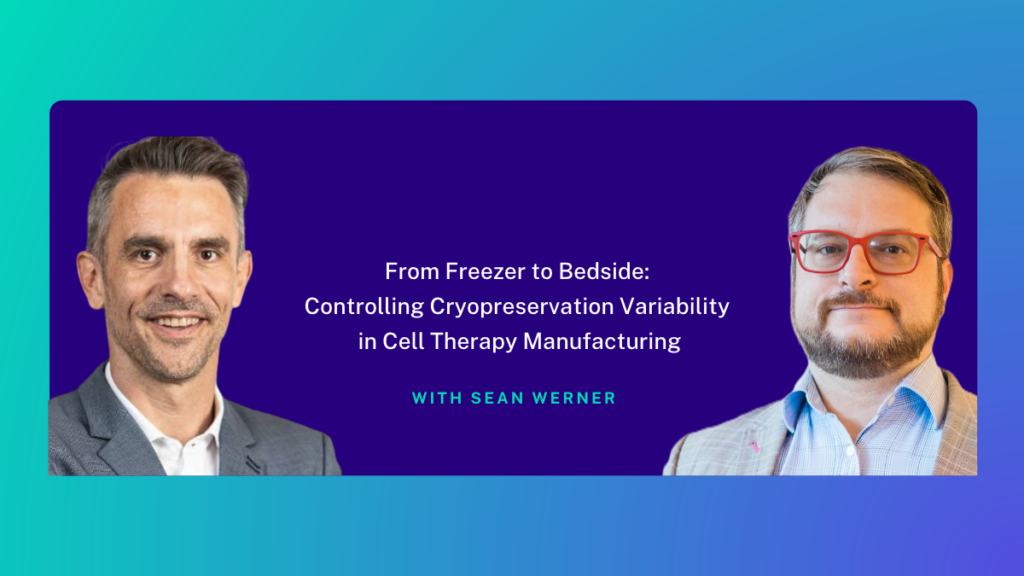
Biopreservation and cell processing are critical pain points in scaling advanced therapies for global distribution, with variables like cryoprotectant toxicity, transport stability, and automation dictating both cost and clinical success.
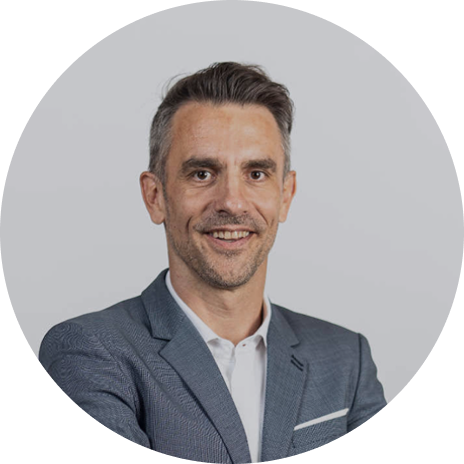
Sean Werner, CTO of Cell Processing at BioLife Solutions and former Sexton Biotechnologies leader, has seen the real cost when assumptions break down at scale. From container fractures to uncertain analytics, he’s guided teams through the frontline challenges of CMC and biologics.
Episode Highlights
- Why decentralized manufacturing and local storage might be the most practical path forward for delivering cell therapies globally [03:05]
- Key distribution chain challenges—how logistics complexity escalates with cross-border shipments and the risks of primary packaging failure [03:44]
- Regulatory expectations for transport validation and the importance of container integrity during shipping [04:49]
- The growing role of automation and closed systems in reducing manual steps, with a look at current capabilities and future directions [06:41]
- How more advanced analytics could unlock greater efficiencies and reduce manufacturing costs in cell therapy [07:49]
- Practical guidance for scientists looking to optimize freezing and thawing processes, including common assumptions to avoid [08:39]
- When it makes sense to use DMSO, risk management considerations, and whether DMSO-free really means safer [10:39]
- Long-term aspirations for room-temperature biopreservation and challenging industry assumptions about stability [13:13]
- The importance of process control and attention to detail in minimizing variability and improving clinical outcomes [14:44]
In Their Words
Alternatives are out there, but what I think often gets overlooked is that those alternative, non-DMSO products also typically contain a relatively small-molecule cryoprotective agent, and that agent has its own toxicity profile. Glycerol is a great example. It’s another commonly used CPA, but it certainly has its own issues and risks. You can also end up with degradation products in some of those CPAs. So I think simply saying that a product is DMSO-free doesn’t actually resolve the risks that people often think they’re resolving.
Podcast Transcript
David Brühlmann [00:00:35]:
We’re back with Sean Werner, CTO of Cell Processing at BioLife Solutions, continuing our look at what it takes to protect cell integrity across the CMC journey. From assumptions that work at the bench but become liabilities at scale to the handling details regulators scrutinize in an IND or BLA, Sean brings a perspective shaped by his years leading Sexton Biotechnologies and now helping shape BioLife’s cell processing strategy.
I’d like to circle back to what you mentioned at the beginning. Let’s talk about decentralized manufacturing. We have great therapies with a lot of promise, but unfortunately, they’re often way too expensive, or they’re produced in Western countries, making it practically impossible to deliver them to the patients who need them.
How can these cryopreservation techniques help, and what strategies should we consider once we take the cells out of the lab? There are a lot of things we can’t control. We obviously control the temperature, but there are still many parameters we can’t manage as products are shipped around the world. Until they reach the patients, what are the most important things we should look at?
Sean Werner [00:03:05]:
It’s kind of a tough question to answer. I think there’s a lot packed into that. You mentioned other geographies. It may be the case that managing the distribution of ultra-cold or cryopreserved therapies will never be realistic in some regions. In that case, moving toward localized manufacturing and localized storage is probably the way to go.
Beyond that, managing the distribution chain is a pretty complicated business. I know of one manufacturing process where they were discussing their logistics and the journey from patient to patient. Their vein-to-vein cycle included nine different liquid nitrogen shipments.
David Brühlmann [00:03:41]:
That’s massive. Wow.
Sean Werner [00:03:43]:
And that’s just not reasonable. It’s crazy, right? And that’s with shipments going back and forth across national borders, too. So you’ve got all those shipments, all those costs, and all the regulatory burden of getting things across borders without delays. It’s just crazy. I think distributed manufacturing can resolve a lot of those issues. That’s really the key to reaching other regions: being able to manufacture locally.
That’s often the goal, but it presents a real challenge. Who owns the manufacturing process? Who’s responsible for maintaining control? And how do you make sure that happens? Now, instead of the clinical site simply maintaining control of the product itself, someone outside your facility is responsible for carrying out the GMP manufacturing process. That’s a challenge.
David Brühlmann [00:04:30]:
We’ve been shipping cell lines around the world, across continents, for decades. I understand that cell therapy is different and presents more challenges. What does regulatory readiness really look like when it comes to transport validation and all the other parameters we need to manage?
Sean Werner [00:04:49]:
I don’t think it’s terribly different when it comes to temperature mapping and monitoring, and making sure your containers maintain the conditions they need to. Over the last few years, we’ve developed smart shippers that provide good control and monitoring of location, temperature. I think a lot of progress has been made in that area. What is different, though, is the volume of each individual unit and the security of the primary packaging itself.
If you’re shipping cell lines in small vials, you can pack 96 vials into a container or box, put everything together, and ship it. Those vials aren’t going to break easily. But the bags commonly used for cell therapies have a relatively high risk of breaking.
One of the companies we previously had was a storage company providing long-term GMP storage at -80°C and in liquid nitrogen. In our experience, when we received retention samples or backup doses for CAR-T therapies, up to about 10% of incoming shipments had broken bags. The bags had actually fractured by the time we received them. I think that’s one of the things that’s significantly different. I’d encourage people to spend time making sure their process has a much lower fracture rate than that.
There are solutions. Bags are one option, and other solutions are available. For example, we developed a rigid container to address this problem. I think that’s one of the key differences to consider.
David Brühlmann [00:06:19]:
When we look at the entire chain, from production and delivery to administration to patients, I’d say that, unlike biologics, there’s still a lot of manual work involved and probably more open steps than necessary. To what extent can automation and closed systems change that?
Sean Werner [00:06:41]:
We’re very much moving in that direction. Individual modules can be automated, and several all-in-one systems have now been developed and are starting to gain traction in the industry. Automation is definitely becoming part of what we’re doing on the processing side.
In our field, people often look at automation and assume it’s going to speed things up. But that’s not really the main benefit. It’s more about the control you mentioned. It’s about closing processes and reducing the need for highly trained manufacturing associates, or sometimes even highly trained PhD scientists, to carry out these steps manually. I think building analytics into those automated processes is the next big step forward. And it’ll help. It definitely will.
It could even reduce the environmental control requirements for manufacturing, allowing us to carry out processes in Grade C or Grade D cleanroom spaces while essentially performing everything in a Grade A environment within closed systems.
David Brühlmann [00:07:38]:
What do you think will be the next technological development in this area to bring costs down further and make production and delivery more efficient?
Sean Werner [00:07:48]:
I think it’s analytics. I really do. Obviously, I wasn’t active in the field when large molecules moved from the early days to where we are now. The challenges at the beginning were clearly significant, but my understanding is that once we learned how to analyze those products better, we were able to introduce efficiencies into manufacturing steps that really increased titers, improved production speed, and optimized all those different parameters. I think that until we reach the point where we know what to measure and how to measure it for our cell products, we’re going to be limited. So I think that’s going to be the next big step forward, the next leap.
David Brühlmann [00:08:26]:
Let’s make this very actionable for the Smart Biotech Scientist listening who wants to improve control over freezing and thawing. What are some key pieces of advice you would give them?
Sean Werner [00:08:38]:
I would say, make sure you’re monitoring the process correctly. So, if you’re using a thermocouple in a sentinel vial, for example, make sure you can detect when ice nucleation happens. Do a comparison in your lab to make sure that’s actually what’s happening in the other containers. I think that’s one of the assumptions people make that isn’t always correct. So that’s critical.
I think that as you move through your process, changes to upstream steps, such as the expansion process or the transduction process, can affect the cell’s sensitivity to freezing. For example, you may have been using shaker flask expansion for a suspension cell, and then you move to a gas-permeable bioreactor chamber, such as a G-Rex, that cell is primed differently for the cryopreservation process.
What we’ve seen is that results that were good after thawing with one expansion process don’t always translate to another. So, as you make changes to your upstream process steps, evaluate whether those changes have an impact on your post-thaw measurements. That was unexpected, but I think it’s something people often miss and should be doing. I think you should definitely optimize the overall cryopreservation cycle for your cell product. Don’t assume the standard default cycle is going to work.
Another thing we’ve seen that surprises me a little is that people don’t validate whether different containers should be frozen together or in separate cycles. For example, if you’ve got 20 retention samples in vials that you want to cryopreserve, along with your therapeutic product in a 70 mL format, they may or may not perform the same way within the same freezing cycle. I think that’s something people should evaluate as well.
David Brühlmann [00:10:34]:
When should they still use DMSO, and when should they not?
Sean Werner [00:10:38]:
DMSO is an interesting one. I think there’s no doubt that at warmer temperatures, such as room temperature, DMSO is toxic to the cells themselves. So making sure you control the temperature and limit the exposure time is critical.
If you’re thinking about DMSO from a patient-risk perspective, I think it’s important to put that into context. Stem cell transplants have been performed for quite a long time in both pediatric and adult patients. Those products tend to have much higher DMSO concentrations than the cell therapies we’re developing.
So I think DMSO is something you should consider, but people tend to overestimate the downstream risks. You need to put it in the context of what you’re doing and how you’re managing those risks.
Alternatives are available, of course, but what often gets overlooked is that alternative, non-DMSO products also typically contain a relatively small-molecule cryoprotective agent, and that agent has its own toxicity profile.
Glycerol is a great example. It’s another commonly used CPA, but it certainly has its own issues and risks. You can also end up with degradation products in some of those CPAs. So I think simply saying a product is DMSO-free doesn’t actually resolve the risks that people often think they’re addressing.
David Brühlmann [00:12:00]:
I’d like to come back to your story. You’ve held several leadership positions, and you’re now the Chief Technology Officer. What are some key lessons you’ve learned in those roles?
Sean Werner [00:12:11]:
Oh, wow. I’ve never been good at listing things in terms of the biggest lesson, my favorite lesson, or whatever it might be. It all blends together a little for me.
I think one thing that really strikes me is that there’s an assumption that, as a collective group, we know what we’re doing. I think it’s always important to challenge that.
Internally, we may have a really good path and know what we’re doing, but I think it’s really important to keep reaching out to others and learning what they’re doing so you can recognize where you might have your own blind spots.
I know that sounds like a pretty standard, almost silly piece of advice that everyone already knows. But in my experience, we tend to become so focused on what we’re doing internally that it’s easy to forget there are other ways of doing things. So, look at what others have done successfully.
David Brühlmann [00:12:58]:
Excellent. As we’re wrapping up, Sean, what additional questions should I have asked?
Sean Werner [00:13:05]:
Well, one question that often comes to mind when we talk about cryopreservation is whether it’s the long-term solution. Do we need to maintain cryogenic temperatures, or are there other ways we can approach this?
I think we, along with others, are looking at how to improve long-term stability at elevated temperatures. But if we really want these products—and I’m thinking broadly about biotech products as well—to become more widely accessible, can we advance biopreservation processes to achieve room-temperature-stable products? I think that’s something I’d really challenge all of us in the biopreservation field to work on.
David Brühlmann [00:13:40]:
What do we need to do to achieve room-temperature preservation?
Sean Werner [00:13:46]:
Well, that’s a great question. If I knew the answer, I think we’d already be there. I’ve had some experience with people working on cell desiccation and trying to develop similar processes. What’s interesting to me when you bring this up is that many people have an automatic gut reaction that it’s simply not possible.
To really push the limits of what can remain stable at different temperatures, we need to move away from that mindset and stop being constrained by the dogma that these products will break down at room temperature. And I’m talking about all products, including proteins, cells, and whatever else it might be. I think it’s really about supporting the biopreservation research community so it can drive these innovations.
David Brühlmann [00:14:24]:
Absolutely. Smart Biotech Scientists, let us know if you have some great ideas. It would definitely be a game changer if we didn’t have to freeze and thaw cells every single time, or freeze and thaw the final product, whether it’s the drug substance or the drug product. That would be amazing. What is the most important takeaway from our conversation?
Sean Werner [00:14:44]:
I think it’s really make sure to spend the time on the process. That cryopreservation, biopreservation is, at least in the cell therapy space, I mean, I think obviously biotech is a lot more mature, but on the cell therapy side of things, cryopreservation, biopreservation is literally one of the last steps in your manufacturing process. And I think often thinking about how to do that well is very much overlooked. And it’s just assumed that the baseline typical process is going to do what you need. And I think that’s my takeaway for people: don’t overlook it because there’s so much variability that can be introduced into that process to your cells.
And variability for cell therapy has been just a killer on the clinical side. So many products over the years get so close to meeting their endpoints and it’s just the variability of patients. And so if we can control that on the manufacturing side, then it’s just left up to the clinical efficacy.
David Brühlmann [00:15:38]:
This has been great, Sean. Where can people get a hold of you?
Sean Werner [00:15:42]:
So www.biolifesolutions.com, there’s an Ask the Scientist page there. If they go in through that website, they can get to all of our scientific expertise and our experts internally, and we can go from there.
David Brühlmann [00:15:55]:
Fantastic. There you have it, Smart Biotech scientists. I’ll leave the links in the show notes. And thank you so much, Sean, for being on the show today.
Sean Werner [00:16:04]:
Yeah, I appreciate it. Thanks for the invitation and onward for all of us. Let’s go.
David Brühlmann [00:16:07]:
If there is one thread running through this conversation with Sean Werner, it’s that preservation decisions made early, often before scale is even on anyone’s mind, can shape a program’s regulatory and clinical fate. Getting biopreservation right from day one isn’t a detail, it’s foundational. If you enjoyed this episode, please leave a review on Apple Podcasts or your favorite platform. Thank you for tuning in today, and we’ll see you next time.
Disclaimer: This transcript was generated with the assistance of artificial intelligence. While efforts have been made to ensure accuracy, it may contain errors, omissions, or misinterpretations. The text has been lightly edited and optimized for readability and flow. Please do not rely on it as a verbatim record.
Next Step
If you found value in today’s episode, take a moment to like, follow, and leave a review on Apple Podcasts or your favorite platform—it helps us reach and support more scientists like you.
Thanks for tuning in to the Smart Biotech Scientist podcast and being part of this journey toward bioprocess mastery. For more insights and practical tips, visit
About Sean Werner
With a background in biology and biotechnology, Sean Werner leads technology development for Cell Processing at BioLife Solutions. Before the company acquired Sexton Biotechnologies in 2021, he served as its President, overseeing a business focused on processing and handling solutions for the cell and gene therapy industry. He earned his PhD from Purdue University and held postdoctoral positions at Indiana University School of Medicine and Eli Lilly.
Connect with Sean Werner on LinkedIn.
Further Listening
If this episode has you rethinking freeze-thaw, here’s where to go next. Start with the science behind cryopreservation, then compare two takes on cryoprotectants: DMSO-free formulations and antifreeze-inspired chemistry.
Episodes 241 - 242: DMSO in Cell Therapy: Why Viability Scores Hide the Real Toxicity with Steve Oh
Episodes 161 - 162: How to Achieve 85%+ Cell Recovery Without DMSO’s Toxic Side Effects with Jeffrey Allen
Episodes 65 - 66: Freezing and Thawing Cells: the Science Behind Cryopreservation with Mark Davison
Episodes 129 - 130: Revolutionizing Cell Therapy Manufacturing: Reducing Costs to Reach More Patients with Jason Foster
Want to Join?
Are you a CMC or biomanufacturing leader with hard-won lessons on process development, scale-up, or CDMO management? We’re always looking for practitioners with real execution stories to share on Smart Biotech Scientist.
Apply to be a guest or recommend someone:
David Brühlmann is a strategic advisor who helps C-level biotech leaders reduce development and manufacturing costs to make life-saving therapies accessible to more patients worldwide.
Hear It From The Horse’s Mouth
Want to listen to the full interview? Go to Smart Biotech Scientist Podcast.
Want to hear more? Do visit the podcast page and check out other episodes.
Do you wish to simplify your biologics drug development project? Contact Us