We’re witnessing medical miracles that were once the stuff of science fiction: gene therapies that can cure inherited diseases and bi-specific antibodies that can target multiple diseases simultaneously.
However, a stark and sobering reality shadows these breakthroughs: most of the world’s population cannot access them. While science has advanced at an incredible pace, the systems for manufacturing and delivery have lagged, making these life-saving treatments a luxury for the privileged few.
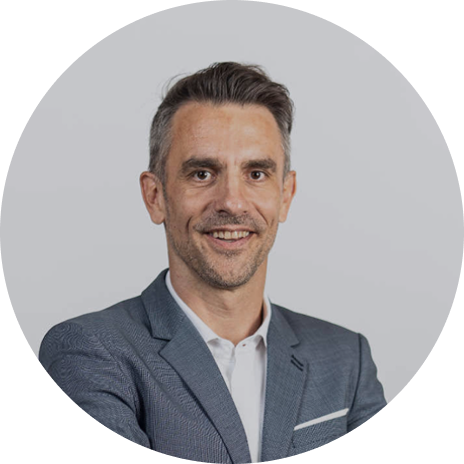
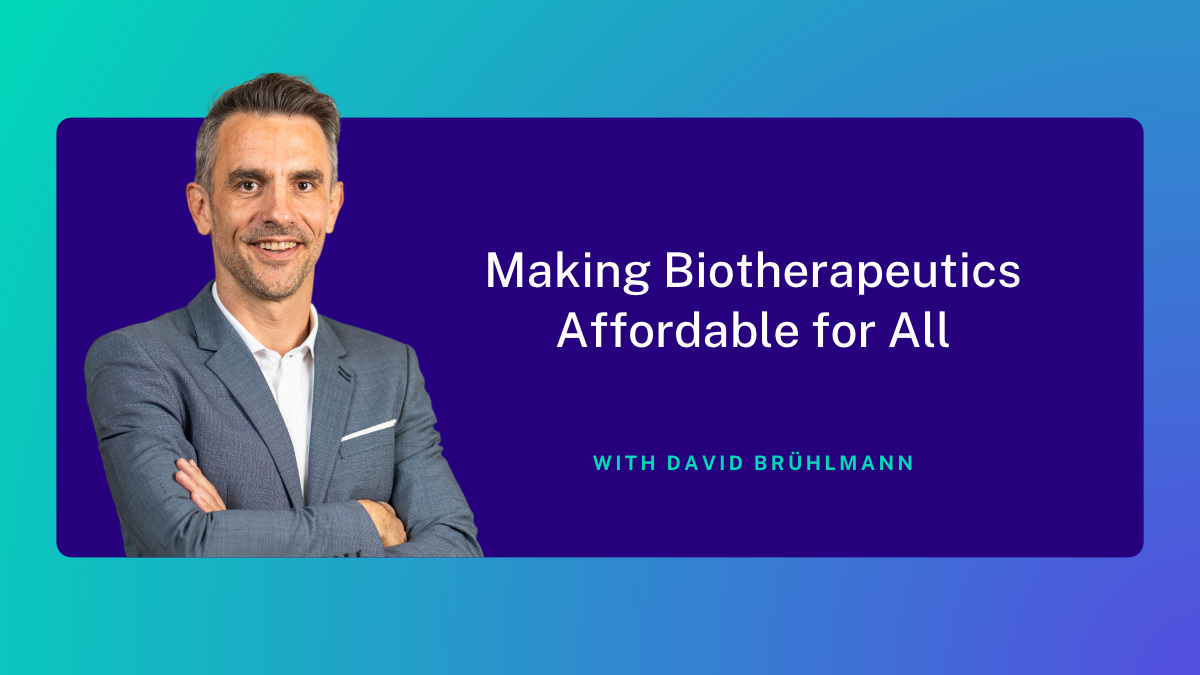
This concept is discussed in greater detail in an episode of the Smart Biotech Scientist Podcast, hosted by David Brühlmann.
The Bioprocessing Journey: From Insulin to Cell Therapy
To understand our current position, we must first appreciate the path that has brought us here. The bioprocessing revolution began with the approval of recombinant insulin in 1982. This was a landmark achievement, a true medical miracle at the time. Over the following decades, the focus shifted to antibody therapeutics, which have since revolutionized the treatment of various diseases, from cancer to autoimmune disorders. Today, there are over 100 FDA-approved antibody therapeutics on the market.
However, Brühlmann emphasizes that this revolution was just a warm-up act. The industry is rapidly expanding into new, mind-bending modalities that seemed impossible just a few years ago. The future isn’t just about antibodies; it’s about a new generation of therapies poised to reimagine healthcare and sustainable food production completely.
The Future is Here: Scenarios That Seemed Impossible
Brühlmann paints a vivid picture of a future that is, in fact, already being made. Let’s fast forward to a Thursday morning in 2030:
- In a Singapore lab, a technician is finalizing a personalized cell therapy for a patient using their own cells. The treatment, which started manufacturing just nine days prior, will be ready to save a child’s life in Mumbai by evening.
- In a Chicago restaurant kitchen, a chef is unwrapping a perfect cut of Wagyu steak. This is no ordinary steak; it was produced in a precision-controlled bioreactor just down the street, without ever requiring an animal.
- In a Berlin hospital, an oncologist reviews real-time manufacturing data for a bi-specific antibody specifically produced for her patient.
These are not futuristic fantasies. The scientific foundations for all three of these scenarios already exist. Manufacturing at scale is the single challenge between these breakthrough technologies and widespread adoption. The next revolution won’t just happen in research labs; it will occur in bioprocessing facilities and will happen faster than we think.
The Five Critical Challenges Facing the Industry
Brühlmann identifies five major roadblocks that the bioprocessing industry must overcome to make life-saving therapies accessible to the 80% of patients who currently can’t afford them. Each of these challenges represents an opportunity for innovation and a call to action for everyone working in the field.
1. Moving Away from Platform Technologies
For decades, the industry relied on a standardized template for producing antibodies. This platform technology involved cultivating robust cells (mostly CHO cells) in a bioreactor, harvesting them, and then purifying the protein using a series of steps that included a Protein A column. While this approach was efficient, it’s no longer a one-size-fits-all solution.
The new modalities—cell therapies, cultivated meats, and more—cannot be shoehorned into this old template. Each new molecule or cell type requires a unique, bespoke manufacturing process. This shift necessitates a fundamental reevaluation of how we design and execute bioprocesses, transitioning from a single, well-trodden path to a new era of diverse and highly customized solutions.
2. Increased Personalization and Small Batch Sizes
The rise of personalized medicine, like autologous cell therapy, introduces a new set of logistical and manufacturing challenges. In these cases, a patient’s cells are isolated, cultivated in a lab, and injected back into them. This means the patient population is one, requiring small batch sizes. This contrasts sharply with traditional biologics manufacturing, which often involves vast stainless steel bioreactors.
In the world of personalized medicine, the facilities resemble a laboratory more than a factory, with numerous cabinets and equipment. Scaling up doesn’t mean building a bigger bioreactor but having more of these smaller, specialized cabinets. This shift demands a new approach to automation, quality control, and logistics to ensure efficiency and reduce costs, moving away from manual, paper-driven processes.
3. Cultivating Increasingly More Sensitive Cells
While CHO cells were quite robust and could withstand a lot, many newer modalities involve cultivating highly sensitive cells that require a much gentler touch. This has sparked a wave of innovation in the bioreactor space. Companies are developing new bioreactor technologies to provide stress-free cultivation conditions.
Examples include:
- Acoustic wave bioreactors, which use sound waves to mix cells without the need for a traditional agitator.
- Bionic bioreactors that create an optimal, stress-free environment for cell growth.
- A tilted, partially filled cylindrical bioreactor that rotates to provide gentle and homogeneous mixing for even the most sensitive cells.
This focus on gentle cultivation is crucial, as any stress on the cells can impact the quality and yield of the final product.
4. The Cell Has Become the Product
Perhaps the most mind-boggling challenge is the shift in what the industry considers the final product. The product was an antibody protein for decades—a relatively small molecule of about 150 kilodaltons. Today, in cell therapy, the product is a living, fully functioning cell.
A cell is a billion times more complex than an antibody protein. This complexity extends to every part of the manufacturing process, from cultivation and purification to quality control and storage. Working with a living product introduces a host of new variables and challenges that require a complete overhaul of traditional bioprocessing methods.
5. The High Cost of Products Prevents Widespread Access
This is the ultimate challenge and the driving force behind Brühlmann’s mission. The cost of these revolutionary therapies is often astronomical, making them inaccessible to most of the world. For instance, two recently approved gene therapies for sickle cell disease, a condition that affects millions of people, cost over two million dollars per treatment. Even in the Western world, few people can benefit from such therapies.
This problem is not unique to gene therapies. In the CAR-T space, for example, less than 3% of patients globally who could benefit from these treatments have been able to receive them. While there has been an increase in the number of patients treated, the total number of people helped is a mere drop in the ocean compared to the addressable patient population. The high manufacturing cost and distribution challenges are the primary drivers of this inaccessibility.
Turning Challenges into Opportunities
The challenges outlined by Brühlmann are significant, but they are not insurmountable. The bioprocessing industry is at a crossroads, and every obstacle presents a new opportunity for innovation. The goal is no longer just to develop the next breakthrough; it’s to create a new manufacturing approach that makes breakthroughs accessible to everyone, not just the privileged few.
Brühlmann’s insights are a call to action for the entire industry. By tackling these five challenges—moving beyond platform technologies, embracing personalization, cultivating sensitive cells with care, mastering the complexities of the cell as a product, and, most importantly, driving down costs—we can unlock the full potential of these revolutionary therapies. Its mission requires a collective effort, from academia to big pharma, to transform complex science into commercial success that truly benefits all of humanity.
Next Step
If you found value in today’s episode, take a moment to like, follow, and leave a review on Apple Podcasts or your favorite platform—it helps us reach and support more scientists like you.
Thanks for tuning in to the Smart Biotech Scientist podcast and being part of this journey toward bioprocess mastery. For more insights and practical tips, visit
Further Listening
If you enjoyed this episode you might also like listening to:
Episodes 129 - 130: Revolutionizing Cell Therapy Manufacturing: Reducing Costs to Reach More Patients with Jason Foster
Episodes 105 - 106: From Proteins to Cell Therapy: Why ATMPs Aren’t Just Complex Biologics with Oliver Kraemer
Episodes 109 - 110: Spinning Like Earth: Designing Low-Shear Bioreactors for Better Cell Culture with Olivier Detournay
Want to Join?
Are you a CMC or biomanufacturing leader with hard-won lessons on process development, scale-up, or CDMO management? We’re always looking for practitioners with real execution stories to share on Smart Biotech Scientist.
Apply to be a guest or recommend someone:
David Brühlmann is a strategic advisor who helps C-level biotech leaders reduce development and manufacturing costs to make life-saving therapies accessible to more patients worldwide.
Hear It From The Horse’s Mouth
Want to listen to the full interview? Go to Smart Biotech Scientist Podcast.
Want to hear more? Do visit the podcast page and check out other episodes.
Do you wish to simplify your biologics drug development project? Contact Us