Biotech startups daring to develop first-in-class biologic therapies are no strangers to complexity. The journey from innovation at the lab bench to clinical trials is rife with scientific, regulatory, and operational hurdles.
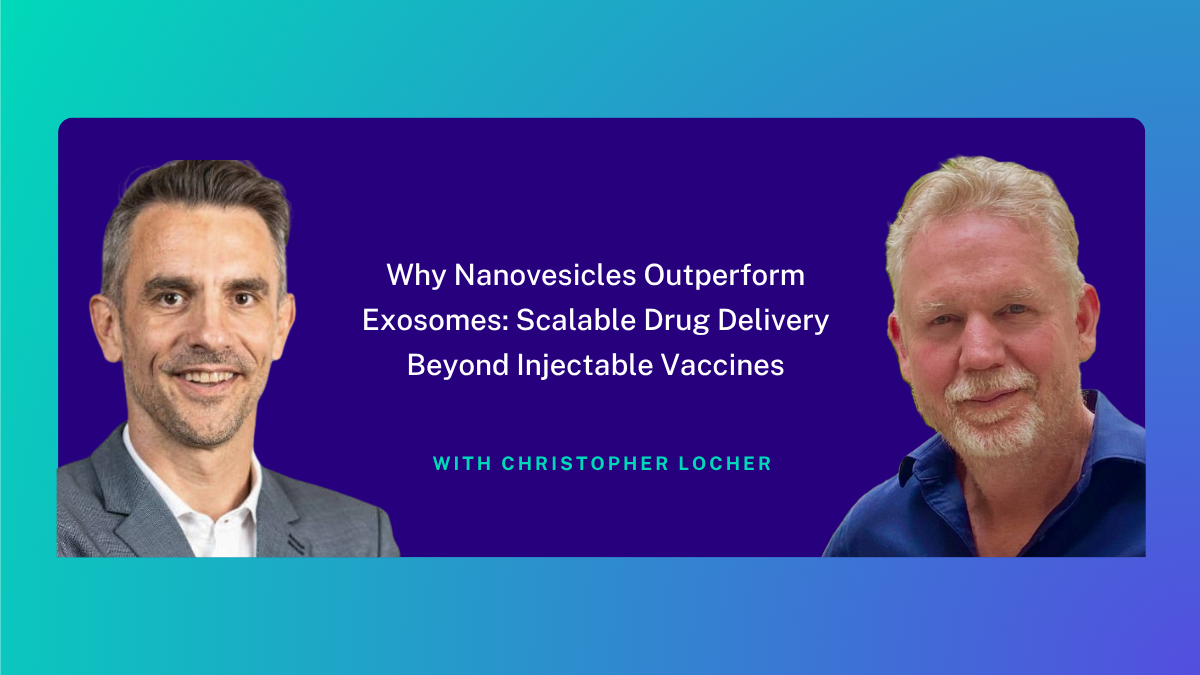
In this episode of the Smart Biotech Scientist Podcast, Christopher Locher, CEO and Co-founder of Versatope Therapeutics, unveiled their strategy for overcoming these challenges — from groundbreaking vesicle technology to real-world manufacturing decisions and the vision for global impact.
Episode Highlights
- Tackling GMP manufacturing challenges and analytics development from scratch [00:34]
- Deciding what to outsource vs. insource as a small biotech, and the value of a robust tech transfer process [02:25]
- Perspectives on partnering with CDMOs versus managing manufacturing and analytics in-house [02:40]
- Geographic expansion goals and considerations for delivering low-cost biologics in underserved markets [04:26]
- Differentiators of Versatope’s platform—endotoxin-free processes and non-pathogenic strains [05:05]
- Key advice on critical quality attributes and early regulatory planning for Phase 1 readiness [06:19]
- Lessons learned as a biotech founder—getting support, leveraging networks, and planning cost-effectively [07:57]
- Understanding end users, leveraging I-Corps™, and customer discovery in early product development [09:04]
- The science and promise of engineered nanovesicles: delivery routes, biological origins, and research applications [10:12]
- Business models for platform out-licensing and potential for co-development partnerships [12:58]
- Practical takeaways for scientists: setting “good enough” standards and focusing on lean, regulatory-aligned development [13:28]
In Their Words
I think there’s a lot of opportunity with this vesicle technology because it can be delivered through the skin. I think, in terms of cosmetics and skin diseases, there may be opportunities there. It can also be delivered orally. So, like I mentioned earlier, delivering these antibodies orally—or other immunotherapeutics orally—I think would be pretty neat to do. All of this is going to take clinical development work, and right now we have a lot of ideas that we need to prioritize. We have to bring one product at a time into the clinic.
Podcast Transcript
David Brühlmann [00:00:31]:
Building a novel delivery platform is one thing. Manufacturing under GMP with no established playbook is another challenge entirely.
Christopher Locher returns to continue our conversation, taking us deeper into the practical realities of bringing a first-in-class biologic from bench to clinic—the infrastructure decisions, the analytical methods, and the regulatory conversations that don’t follow a template.
Christopher is the CEO and co-founder of Versatope Therapeutics. He has navigated this path from multiple angles throughout his career. Let’s continue. Here is Part One of our conversation.
What is your company’s approach? You mentioned the word CDMO. As a smaller company, you always face the challenge of deciding what to focus on, what to outsource, and what to keep in-house. What’s your philosophy there?
Christopher Locher [00:02:39]:
One has to have a pretty firm understanding of what they have and how to characterize it before they transfer the technology. So we developed all of our assays in-house here in Massachusetts before sending them to CDMOs for technology transfer.
Initially, we outsourced some work because we didn’t have the necessary equipment. But once we acquired that equipment, we were able to perform the work ourselves, optimize the assays, understand the operating parameters and standard deviations, and then transfer them using robust protocols and standardized templates that could be implemented at the CDMO, or wherever the product ultimately needed to be manufactured.
We also performed many of our own analytical tests. We have 24 qualified analytical assays. We didn’t qualify all of them ourselves. We qualified some internally, while others were qualified with the appropriate staff at the CDMO once the protocols were in place.
David Brühlmann [00:03:38]:
Did you also consider working with CROs for some of the analytical work, or was that never really part of the strategy because you developed everything in-house?
Christopher Locher [00:03:48]:
We’ve subcontracted some work to CROs, and our CDMO has subcontracted some work as well, although not very much.
We prefer to do the bulk of the work through a single one-stop shop that can handle both manufacturing and analytics in one place. That includes both the drug substance and the drug product.
I’m not a big fan of shipping materials around. If we need to lyophilize a product, we’d rather work with a manufacturer that can perform the upstream processing, downstream processing, lyophilization, fill-finish, and as many of the analytical assays as possible—all under one roof with the appropriate equipment.
David Brühlmann [00:04:17]:
I’m curious—where do you see your company in, say, three to five years? Where would you ideally like it to be?
Christopher Locher [00:04:26]:
Locally, I’d like us to remain where we are, in the same geographic area. But I’d also like to expand our global footprint by working more extensively in Europe.
I think there are a lot of opportunities and unmet needs in Europe, and there are certainly many outstanding scientists and companies there. Australia and the Asia-Pacific region are also important areas for expansion.
I like to think globally. As you mentioned earlier, could this technology be transferred south of the equator? I think we have opportunities there with our malaria program and with some of the other programs we’re developing.
David Brühlmann [00:04:55]:
And what does this look like from a cost perspective? Because in many of these regions, cost is a major consideration. Is it comparable to traditional biologics?
Christopher Locher [00:05:05]:
Better. Oh, it’s certainly better for our product. We can manufacture these products much more cost-effectively. We don’t have the endotoxin challenges that many companies have to deal with because we use cell lines that are relatively endotoxin-free, and we’ve thoroughly characterized them.
That allows us to use a relatively robust, low-tech manufacturing process that can even be performed at the benchtop scale.
Another differentiator for our vaccine products is that we don’t use pathogenic organisms. Many companies work with pathogens, which require special containment facilities such as Biosafety Level 2 (BSL-2) or even BSL-3 laboratories. Those facilities require specialized containment systems, including controlled airflow and HEPA filtration.
We don’t have to go down that route. We use simple, non-pathogenic microbial strains and engineer our products into those organisms. The strains themselves are non-pathogenic and do not cause disease in humans. That’s a major differentiator between our platform and many of the other technologies being developed.
David Brühlmann [00:06:01]:
Let’s make this actionable for the smart biotech scientists listening. What’s the single piece of advice you would give them about navigating the path you’ve successfully taken from discovery into Phase 1? What should they focus on?
Christopher Locher [00:06:18]:
Know your blind spots. You need to surround yourself with people who can support you and understand what has to be done early in development.
For example, one of the first things we focused on was defining our critical quality attributes (CQAs) and developing the associated analytical assays. We invested a lot of time and effort into that. To be honest, I didn’t even know exactly what CQAs were at first. I had a general idea, and then it clicked: “Oh, you mean the analytical assays.”
And they said, “Yes—you need to demonstrate batch consistency. You need stability data. You need to know what defines a good product versus a bad product.”
Having experienced consultants and team members who can help you navigate those requirements and design experiments that satisfy regulatory expectations is incredibly important. You need to do that very early.
One of the first things we had to do was develop monoclonal antibodies. We were told, “You need monoclonal antibodies against your target—period. And not only against your target, but also against your vesicles.”
So that’s exactly what we did. Those antibodies allow us to determine how many vesicles we have and how much of our product is present—in terms of both concentration (micrograms) and the actual amount of product. That enables us to quantify the critical quality attributes of the product.
One of our earliest activities was outsourcing the development of those monoclonal antibodies. Nowadays, companies can generate them relatively quickly, and having those reagents available was extremely valuable.
Once we had them in place, we were able to continue with the more routine analytical methods, such as measuring osmolality, pH, particle size, and the other standard quality parameters.
David Brühlmann [00:07:47]:
Now, circling back to your career path, I’d love for you to share your biggest lesson as a co-founder and CEO of a company.
Christopher Locher [00:07:57]:
Probably that you can’t do it all by yourself. You have to rely on other people, and you need to build a strong network.
For example, going back to critical quality attributes (CQAs), I met one fellow at a Boy Scout event because we were both dads and our sons were in Boy Scouts together. We started talking about immunology, and it turned out he was a CMC expert. He eventually joined us as a consultant and helped us establish all of our critical quality attributes before our first team meeting with the NIH.
Having him on board was extremely helpful in setting the direction for the company and defining early on what constitutes a good product. So I think my biggest lesson was to get as much support as you can and to do it as cost-effectively as possible.
David Brühlmann [00:08:43]:
If someone wants to start a company because they have a promising technology and have identified an unmet medical need, how should they go about it?
Christopher Locher [00:09:04]:
I think a lot of that entrepreneurial support has traditionally come from the NIH. That’s where it’s important to understand who the end user is—who’s actually going to use the product. We talked to physicians and asked, “If you had this product, would you use it? And if so, how would you use it?” Understanding how the product would be used in a real clinical setting is extremely important, as is understanding the unmet need and how your product complements existing therapies rather than necessarily replacing them.
There’s also a program called I-Corps™, which is strongly supported by the U.S. National Science Foundation (NSF) and has also been adopted by the NIH. It’s designed to help researchers with early-stage technologies understand potential users and implementation in real-world settings.
So talking to physicians, talking to primary care providers, and talking to other healthcare professionals is very important. I was fortunate because I had people like that in my network, and I’m based here in Massachusetts, where you don’t have to walk very far before running into someone working in biotech or high tech.
David Brühlmann [00:10:02]:
This has been great, Christopher. What additional question should I have asked?
Christopher Locher [00:10:08]:
My imagination could run wild with that. I think there’s a lot of opportunity with this vesicle technology because it can be delivered through the skin. In cosmetics and dermatological diseases, there may be significant opportunities. It can also be delivered orally. Like I mentioned earlier, delivering antibodies—or other immunotherapeutics—by the oral route would be really exciting.
All of this is going to require clinical development work. Right now, we have a lot of ideas that we need to prioritize, and we’ll bring one product into the clinic at a time.
I think you’ll continue to see in the scientific literature that vesicles are everywhere. Plants produce vesicles. They’re found in the oceans. They’re involved in cell-to-cell communication throughout biology.
Ironically, I spent many years doing HIV research at the University of California, San Francisco (UCSF), where I worked with Jay Levy, one of the co-discoverers of HIV. He published his landmark paper only a few months after Robert Gallo and Luc Montagnier published theirs describing HIV.
Jay devoted much of his career to understanding the immunology of HIV infection. He discovered that CD8-positive T cells could suppress HIV replication through a non-cytotoxic mechanism. For years, people assumed these were conventional cytotoxic T cells, but Jay argued that they weren’t acting through cytotoxicity. Instead, they behaved more like suppressor cells that inhibited viral replication.
It now appears that at least part of that activity may be mediated by extracellular vesicles. You can isolate vesicles from CD8-positive T cells, apply them to CD4-positive HIV-infected T cells, and suppress viral replication.
People thought for years it was a single protein or a handful of proteins of chemokines and cytokines, and that may be true, but a lot of them are packaged in a vesicle. So my point is, is that it’s complicated. There are regulatory RNAs, there’s proteins, there’s cytokines. Everybody is right in that it is complicated. There is a lot of different proteins and there’s a lot of different regulatory functions going on. And when we break things down again to these single molecular interactions, you lose sight of the big picture. And I think working with nanovesicles and engineering them can help us take a step back and look at the big picture and do a deep dive into mechanisms a little bit later. But first show that they’re protective or useful and have their utility in a disease model, and then work out how they’re working later on. Almost like a phenotypic screen is what people typically call that.
David Brühlmann [00:12:39]:
And to what extent could these nanovesicles be used for other applications? Let’s put it this way: if someone already has a therapeutic and wants to deliver it differently, could they potentially use your technology? Is platform licensing part of your business model?
Christopher Locher [00:12:58]:
Yes, we’ve had discussions about that. Companies that are currently delivering therapeutics using liposomes often encounter limitations and drawbacks, particularly related to pharmacokinetic (PK) properties and product performance.
So yes, this is part of our business development strategy. We’d like to pursue co-development partnerships and potentially out-license our platform technology to others.
David Brühlmann [00:13:22]:
Excellent. We’ve covered a lot of ground today. What’s the single most important takeaway from our conversation?
Christopher Locher [00:13:28]:
I think it’s important to keep an open mind. As Einstein famously said, “Imagination is more important than knowledge.” Things can be figured out, but it takes patience, resources, and an entire team to successfully develop new technologies.
I also think it’s important to understand the minimum requirements—what is truly “good enough.” We struggled with that quite a bit. There were many things we wanted to accomplish during process and product development, but ultimately you have to understand what’s required from a regulatory perspective.
Once you know those minimum expectations, you can simplify your development process, focus on the essential work first, and add refinements later. I think that’s a very effective strategy for keeping a company lean while still meeting important development milestones.
David Brühlmann [00:14:15]:
Where can people get hold of you and learn more about your technology, Christopher?
Christopher Locher [00:14:20]:
There’s a lot of information on our website at www.versatope.com. We also have a comprehensive list of publications there.
There are plenty of papers in the scientific literature as well. People can search PubMed through the National Institutes of Health (NIH) and find a large number of publications on extracellular vesicles. Researchers are exploring all kinds of exciting applications for them.
And if you’d like to get in touch with me, LinkedIn is perfectly fine. I check it regularly, and it’s a great way to connect with people.
David Brühlmann [00:14:45]:
Excellent. There you have it, smart biotech scientists. I’ll leave the links in the show notes, so please reach out to Christopher.
Christopher, thank you very much for sharing your passion, your work addressing unmet medical needs, and your experience. It was a pleasure having you on the show today.
Christopher Locher [00:15:02]:
Thank you, David. I appreciate it.
David Brühlmann [00:15:04]:
That wraps up our conversation with Christopher Locher. From the science behind Versatope’s vesicle platform to the manufacturing, regulatory, and analytical challenges of developing a first-in-class biologic—and Christopher’s perspective as a founder and CEO—we covered a lot of ground and, hopefully, gave you ideas you can apply to your own work.
Thank you so much for tuning in today. If you found this conversation valuable, please leave a review on Apple Podcasts or your favorite podcast platform.
Disclaimer: This transcript was generated with the assistance of artificial intelligence. While efforts have been made to ensure accuracy, it may contain errors, omissions, or misinterpretations. The text has been lightly edited and optimized for readability and flow. Please do not rely on it as a verbatim record.
Next Step
If you found value in today’s episode, take a moment to like, follow, and leave a review on Apple Podcasts or your favorite platform—it helps us reach and support more scientists like you.
Thanks for tuning in to the Smart Biotech Scientist podcast and being part of this journey toward bioprocess mastery. For more insights and practical tips, visit
About Christopher P. Locher
Christopher P. Locher, PhD, is CEO and co-founder of Versatope Therapeutics, a clinical-stage biotechnology company developing nano-vesicle-based immunotherapeutics. He brings extensive experience in drug discovery, inflammatory diseases, and vaccine development from roles at Vertex Pharmaceuticals, Opsona Therapeutics, and Maxygen. Dr. Locher completed his postdoctoral training at UCSF and was a Fulbright Hays Research Fellow at the Institute of Tropical Medicine in Antwerp. He holds a PhD in Tropical Medicine and a BA in Biological Sciences from the University of Hawaii.
Connect with Christopher P. Locher on LinkedIn.
Further Listening
If Christopher’s vesicle platform has you thinking about building a novel modality on an unconventional host, these four episodes go deeper on alternative production systems, microbial scale-up, and the CMC and cost decisions that get a first-in-class biologic to patients.
Episodes 217 - 218: Silkworm Biomanufacturing: From Ancient Silk Production to Phase I Vaccine Trials with Masafumi Osawa
Episodes 239 - 240: Continuous Microbial Manufacturing: From Genetic Instability to 40-Day E. coli Processes with Juergen Mairhofer
Episodes 231 - 232: From IND to BLA: The Biologics CMC Decisions That Determine Regulatory Success with Henri Kornmann
Episodes 267 - 268: Why Affordable Insulin Is a Money Problem, Not a Science Problem with Eric Moyal
Want to Join?
Are you a CMC or biomanufacturing leader with hard-won lessons on process development, scale-up, or CDMO management? We’re always looking for practitioners with real execution stories to share on Smart Biotech Scientist.
Apply to be a guest or recommend someone:
David Brühlmann is a strategic advisor who helps C-level biotech leaders reduce development and manufacturing costs to make life-saving therapies accessible to more patients worldwide.
Hear It From The Horse’s Mouth
Want to listen to the full interview? Go to Smart Biotech Scientist Podcast.
Want to hear more? Do visit the podcast page and check out other episodes.
Do you wish to simplify your biologics drug development project? Contact Us